

Research Reports

Disruptive Leadership Institute Research Reports banner introducing global research on leadership, disruption, future-ready organizations and the future of work

At the Centre for Executive Education (CEE), our mission is to assist leaders in the commercial, public, and non-profit sectors towards developing their readiness to survive and thrive in the post-pandemic era of a digital-driven world of work. Together with our research affiliate, the Disruptive Leadership Institute (DLI), which places cutting-edge research at its core, we produce rigorous, independent thinking to offer fresh perspectives on managing the leadership and organizational challenges in a highly disruptive and everchanging workplace of the future.

Combining the power of innovative research techniques with a deep understanding of our client’s industries, our team of researchers and analysts from our extended global network of established human resource management and executive development consulting firms, including our strategic partner, Executive Development Associates (EDA), we publish best practices and benchmarking research reports, articles and points of view every year. EDA’s thought-provoking biennial Report on Trends in Executive Development allows us to offer real-world solutions for our clients.
Future-Ready Leadership – Research Report (2026)

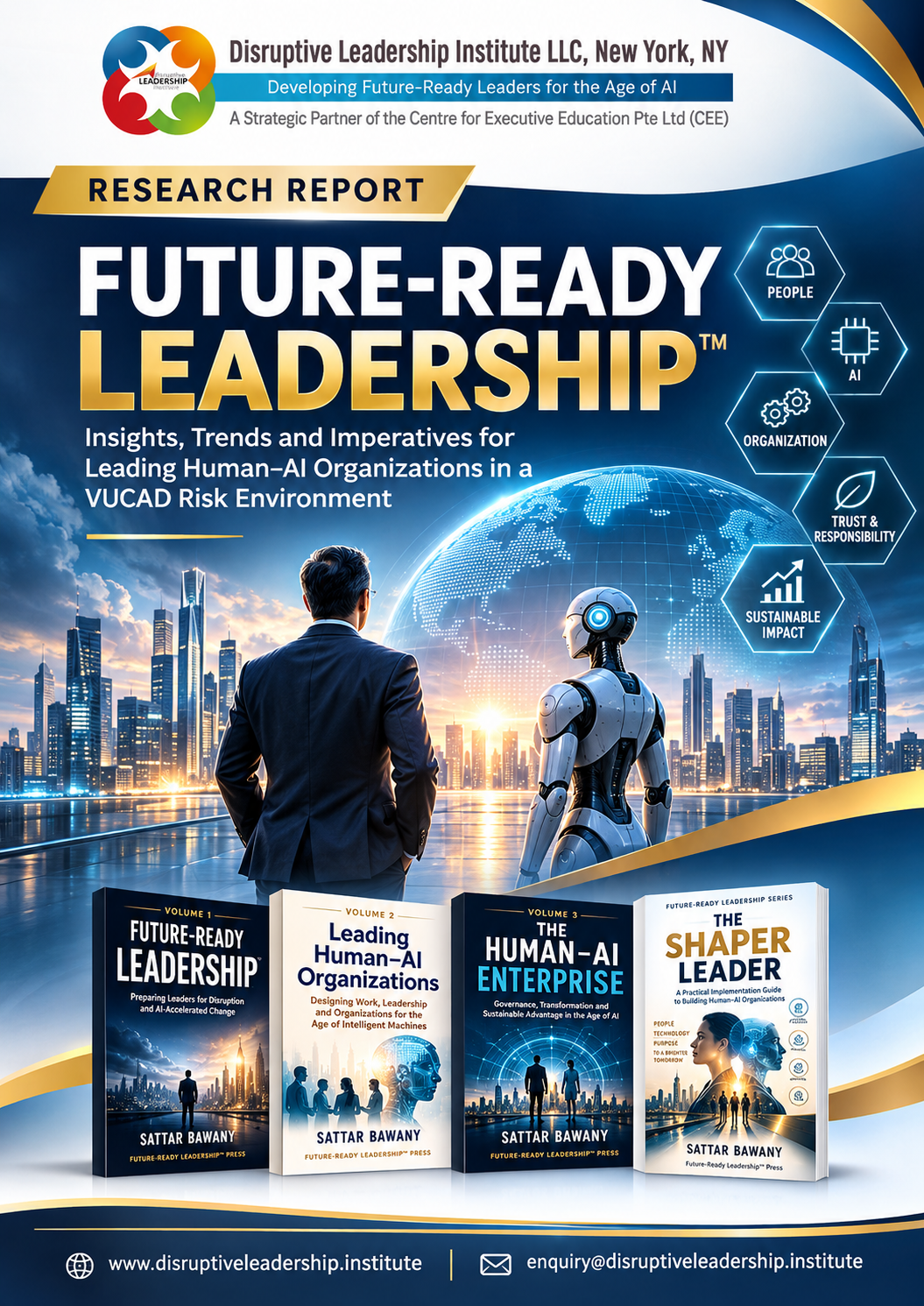
A4 cover of the Future-Ready Leadership: Human–AI Horizons Research Report

Executive Overview

The Future-Ready Leadership™ Book Series provides an integrated, research-informed perspective on the leadership capabilities and organizational conditions required to thrive amid disruption, uncertainty and accelerating technological change. Across its four volumes, the series connects the leadership challenges of a VUCAD environment with the design of adaptive, responsible and high-performing Human–AI organizations. It emphasizes strategic foresight, sound executive judgment, human–AI collaboration, ethical governance, organizational agility and continuous leadership renewal.

The central implication is that future readiness is not simply a technology agenda: it is a strategic, governance and people agenda. Boards should ensure that strategy, risk oversight and accountability keep pace with technological and environmental change. CEOs and C-suite leaders should translate foresight into clear choices, operating-model changes and disciplined execution, while preserving human judgment and trust. CHROs should align workforce planning, leadership development, skills and culture with new ways of working. Together, these leaders must build the capabilities, governance and organizational architecture that enable people and intelligent systems to create sustainable value.

This report synthesizes the series’ key ideas into practical considerations for executive leadership and organizational readiness. It is intended to inform strategic discussion and action; it does not present a new survey or claim original empirical findings.

For further information on the Research Report, contact us.

Research Report on Crisis Leadership (2025)

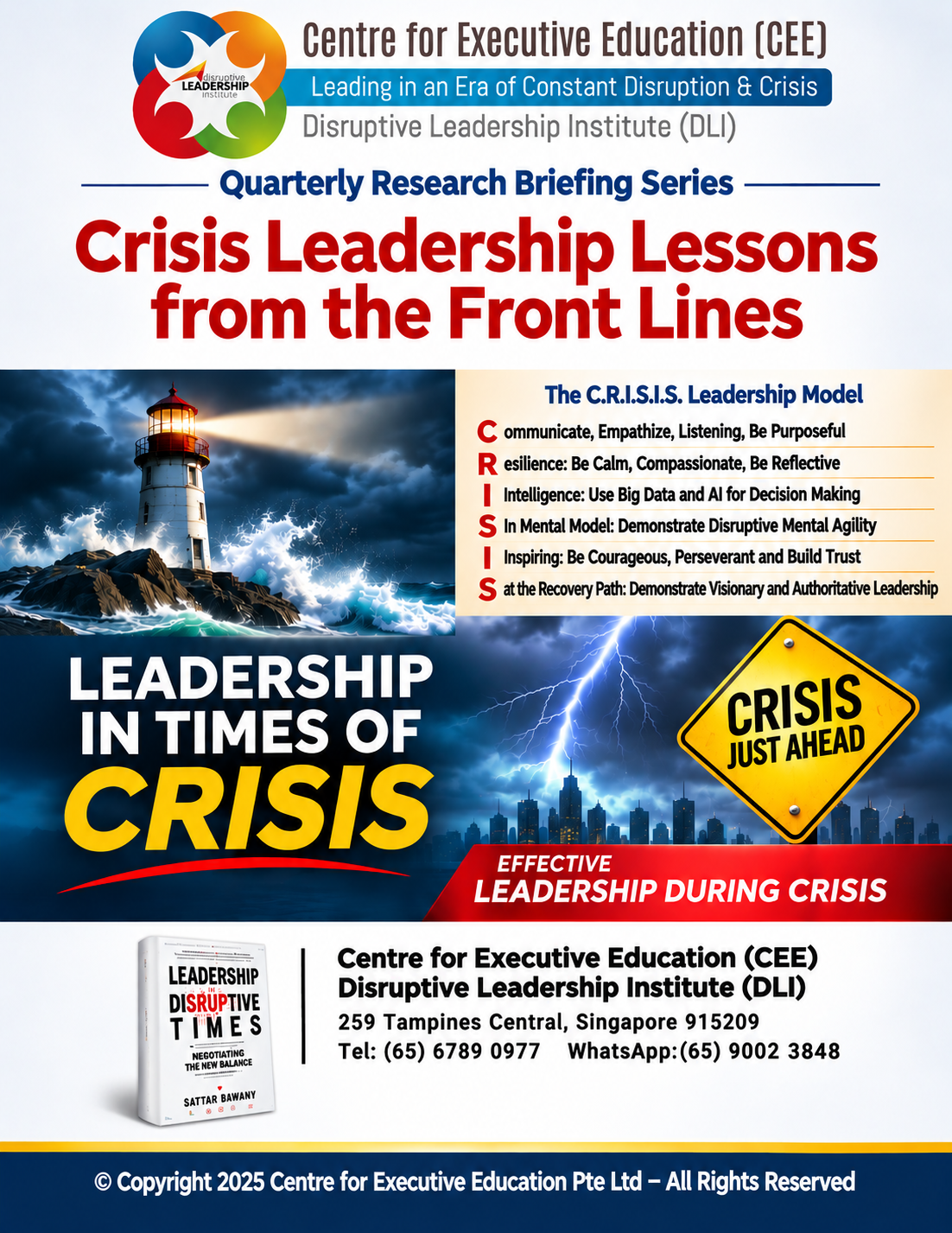
Crisis Leadership Lessons from the Front Lines research report cover, featuring the CEE–DLI logo, lighthouse and C.R.I.S.I.S. Leadership Model

Executive Summary

Recent global crises have reinforced the importance of human-centred leadership. Beyond strategic capability and decisive action, effective crisis leadership requires compassion, empathy, humility and vulnerability to build trust, sustain resilience and guide people through uncertainty and disruption.

The research highlights the need for leadership readiness in a VUCAD environment—Volatile, Uncertain, Complex, Ambiguous and Disruptive—where technological, economic and societal changes increasingly intersect. Leaders must anticipate emerging challenges, exercise sound judgment with incomplete information and mobilize their organizations to adapt. These themes are also explored in Leadership in Disruptive Times: Negotiating the New Balance (Business Expert Press, 2023).

Research methodology and scope. The study adopted a mixed-methods approach, combining qualitative and quantitative analysis with in-depth interviews involving more than 529 C-suite executives, including CEOs and their direct reports, across North America, EMEA (Europe, Middle East and Africa) and APAC (Asia-Pacific). It explored disruptive global trends anticipated by senior executives and the strategies and organizational responses adopted to address the COVID-19 pandemic and the accelerating impact of technological innovation and workplace disruption.

Implications for executive leadership. Effective crisis leadership requires strategic judgment, organizational adaptability and a human-centred approach. CEOs and senior leadership teams must anticipate disruption, communicate transparently, make timely decisions, maintain workforce confidence and turn immediate crisis responses into lasting organizational resilience.

2021 – 2024 Trends in Executive Development Report

Overview

It turns out we can be very innovative and adaptive – when we have to be. That is one of the great lessons from the tumultuous 2020 that is revealed in the trends research. As organizations everywhere were reeling with the impact of the global pandemic, it sparked innovation, because for many if they did not adapt quickly, they would not survive. This innovation spark even impacted those who were suddenly in growth mode due to an in-demand service or product that suddenly rose to high priority in the lives of the homebound masses.

The Trends Report is about leadership at the top, what it takes to get there, and what companies need from their executives today and in the next few years. As we share our insights, please keep in mind that it is impossible to analyze trends without looking back as well as forward to the coming years and outward to the social, business, and governmental landscape.

This is a vital time to think about what is needed, because, great leadership is always important, but when in a crisis, it is crucial. We saw this during the pandemic as some leaders did an exceptional job immediately and others took longer, but all were stretched beyond anything imagined, and there is a lot to learn from this experience.

For further details on the Report, visit here.

Research Report on Future of Work (2021)

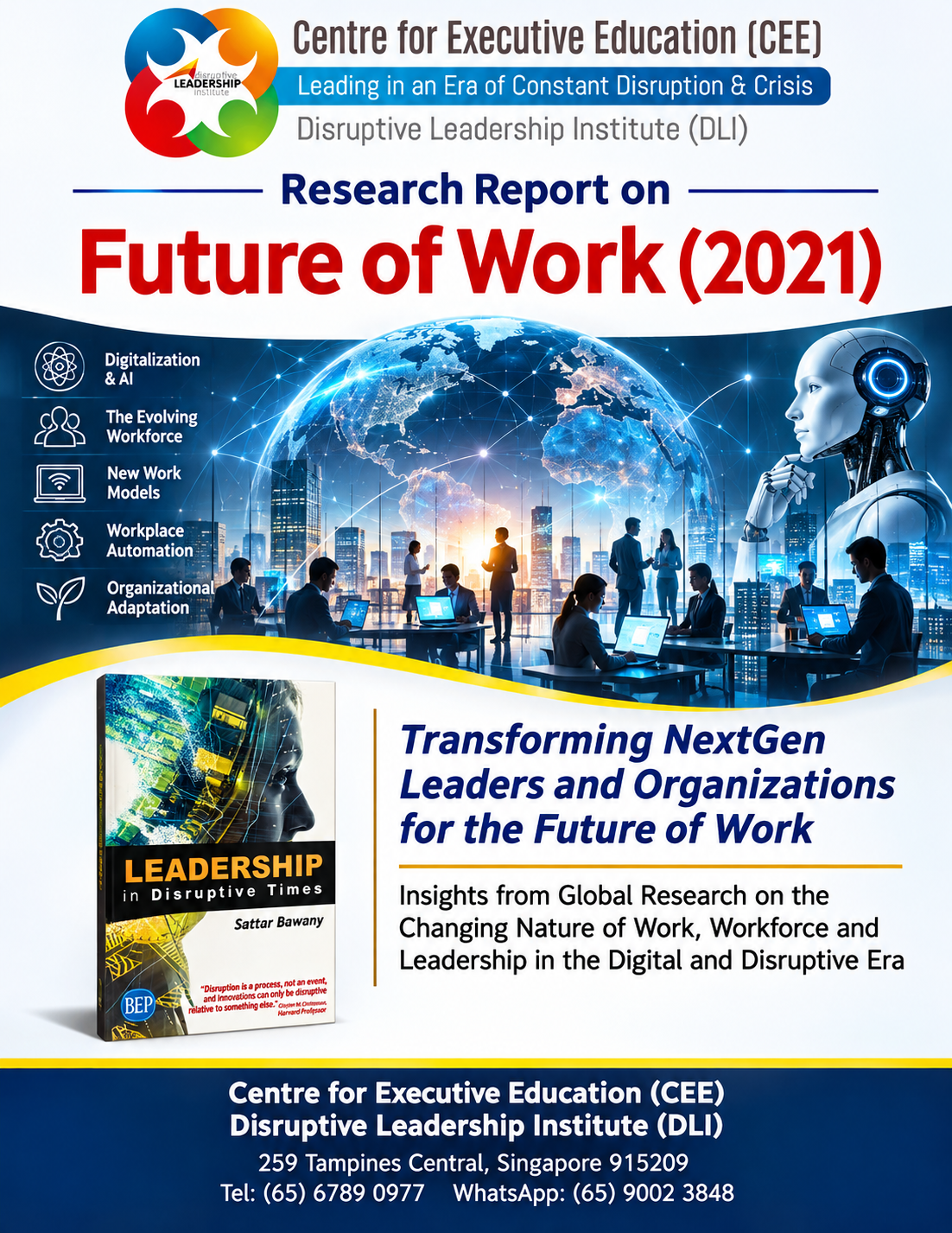
CEE–DLI Research Report on Future of Work (2021), featuring future workplace, digitalization and AI imagery with Leadership in Disruptive Times book cover

Executive Summary

The future of work is being reshaped by digitalization, globalization and the accelerating pace of disruption. The COVID-19 pandemic intensified these changes, transforming how organizations operate, how people work and how businesses create value in the era of the Fourth Industrial Revolution (Industry 4.0).

Drawing on the themes explored in Leadership in Disruptive Times (2020), this report examines the leadership and organizational challenges arising from technological disruption and the changing workplace. It highlights the need for organizations to strengthen digital readiness, rethink established business models and develop the capabilities required to remain agile, innovative and competitive in an increasingly volatile, uncertain, complex and ambiguous (VUCA) environment.

Digital transformation is not simply a technology initiative. It requires leaders to understand how digital technologies can create value while guiding people through new ways of working. Sustainable transformation depends on placing People ahead of Process and Technology (PPT), recognizing that organizational culture, employee engagement and leadership commitment are essential to successful change.

Implications for leaders and organizations. The report emphasizes the importance of developing disruptive digital leaders who can anticipate change, embrace innovation and lead transformation beyond traditional functional or technology roles. It also highlights the need to build an adaptive workplace culture, align people and processes with digital strategy, and equip the workforce for emerging demands.

The 2019 Trends in Executive Development Report

Overview

After more than 30 years of research and reports, the Trends in Executive Development Benchmark Report published by Executive Development Associates Inc. (EDA) has become a trusted resource and industry benchmark created for talent and leadership development professionals as well as executives who believe in developing their organization’s talent in a way that they become a competitive advantage.

The 2019 study was based on the direct input of those who oversee the development of the organization’s leaders for 270 medium and large organizations as well as the insights and analysis of executive development experts and executives. Our team of contributors has decades of combined expertise across an array of business landscapes.

The 2019 survey results identify both current and future trends impacting the executive development industry, some of which have made the list in years past, while others have come to the forefront in this year’s research. The top 5 current factors influencing executive development, as identified by the organizations surveyed, include:

  1. changing business strategies,
  2. digital transformation,
  3. economic conditions,
  4. changing customer requirements, and
  5. the need for increased innovation.

In addition, the top 5 future trends include a focus on business ethics and integrity, innovation, cognitive readiness, community outreach, and competitive positioning. More importantly, a collective look at the trends points toward an overall need pause and review what is working and what isn’t and make the appropriate adjustments.

The Executive Summary is available upon request here.

For further details on the Report, visit here.

The Press Release could be viewed here.

Research Report on Inspiring Your Future Workforce (2015)

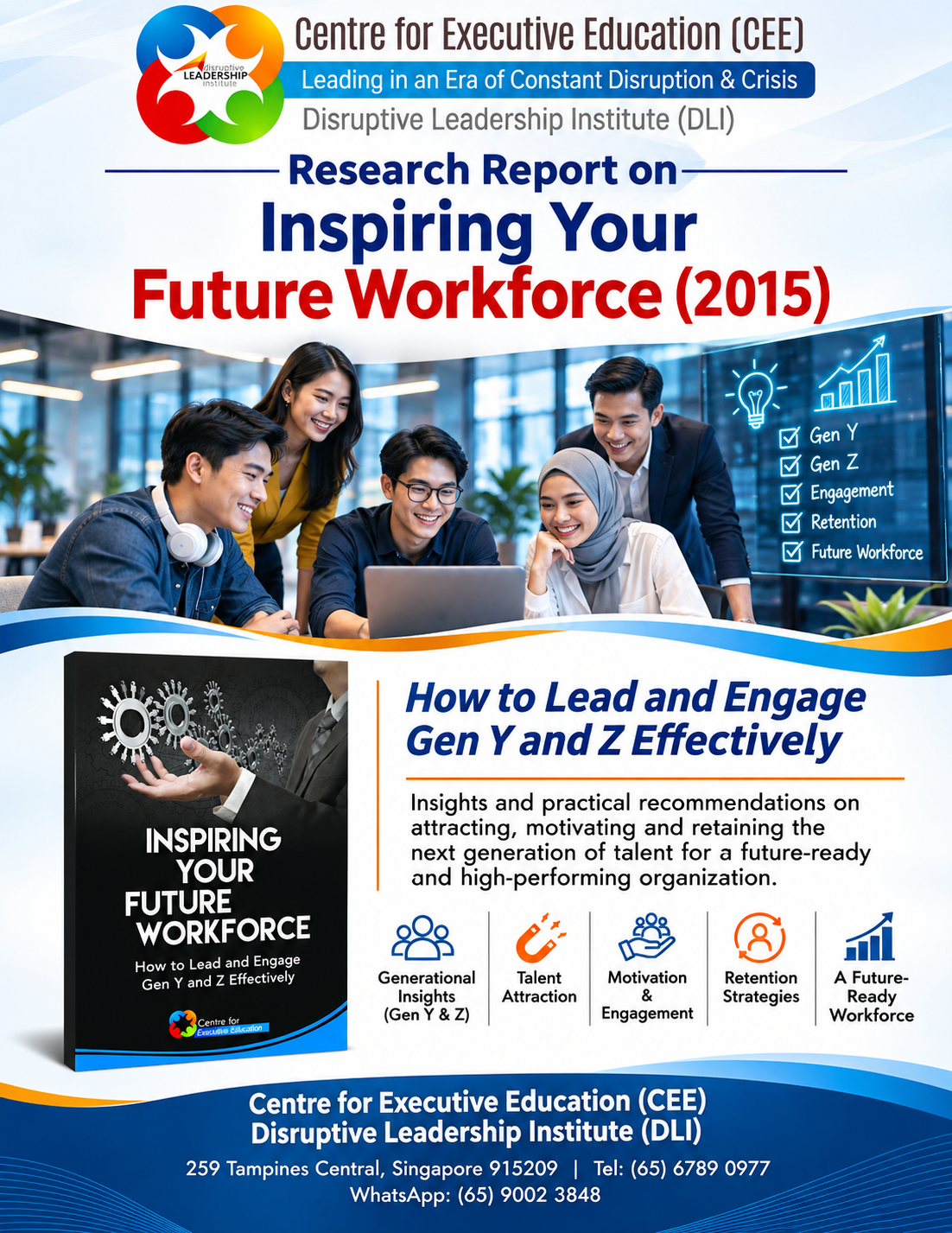
Redesigned CEE–DLI report cover for Inspiring Your Future Workforce (2015), featuring Gen Y and Gen Z employees collaborating in a modern workplace and the original report cover

Executive Summary

The composition of the workforce is changing as Generation Y (Millennials) becomes an increasingly significant part of organizations and Generation Z prepares to enter the corporate world. Understanding what these generations value, expect and need from employers is an important talent-management priority. Organizations must consider how to attract, inspire, motivate and engage employees across generations while building a workforce capable of meeting changing business needs.

The Inspiring Your Future Workforce: How to Lead and Engage Gen Y and Z Effectively research report explores the attributes and perspectives of Gen Y and Gen Z from a talent-management perspective. It provides Singapore employers with insights and practical recommendations to support their talent recruitment and retention strategies, and to consider how leadership and workplace practices can better engage these emerging and evolving segments of the workforce.

Implications for employers and leaders. The research highlights the value of moving beyond assumptions about generational differences and listening directly to employees. Effective talent strategies should be informed by evidence about what people value and expect, and translated into leadership, engagement and workplace practices that help attract, motivate and retain talent. For employers, understanding Gen Y and Gen Z is not simply a matter of labelling generations; it is an opportunity to create a more responsive and inclusive employee experience and prepare the organization for the workforce of the future.

The report is intended to inform employers and leaders as they review their approaches to talent attraction, engagement and retention. The Executive Summary is available upon request through the DLI contact page.

Related resources: Press Release | Channel NewsAsia TV Interview | CNA 938 LIVE Radio Interview.